




It was not only the coverage of the different geographical ranges which started in late October 2024, but it was truly a deep discovery of educational vision, mental readiness, and cultural consciousness. Beginning at Darchula, I proceeded through the mountains of steep slope, zigzag and risky road to Dhangadhi. The journey nearly lasted twenty hours, which put my stamina to the test as well as my mental strength. However, the presence of a prospect to engage in an international conference caused fatigue to turn into determination. This part of the process tested my patience and dedication to the field of professional endeavour as a life lesson that sometimes we are not as prepared as our intellect in the academic journey, as we have to be resilient and flexible as well.

My encounter with Dr. Man Bahadur Jora, Assistant Professor of English at Kailali Multiple Campus in Far Western University, Dhangadhi, gave a different perspective to the tour. His physical warmth, intellectual vitality and quick conversation immediately put new energy into the spirit of the journey. Immediately, we began our journey together to Lucknow, India. The second leg of the journey by bus, although it took fewer hours than the initial journey, was culturally enriching. The crossing of the border exposed us to geographical, cultural, and linguistic differences that expanded our horizons. An exquisite fusion of history, architectural treasures, and the tantalising aromas of street food presented a profoundly culturally enriching experience in Lucknow.
Lucknow experience was not something that comes along with sightseeing, but a living lesson of history, civilisation and cultural pride. We visited the Bara Imambara and the historic step-wells, meandered through crowded bazaars and saw the elegance of the local etiquette, the renowned adab and tehzeeb, and were able to discern in such a manner a society that has been able to maintain its tradition in changing to modernity. At least, in my case, it was in addition to tourism: I consider this a refinement of linguistic awareness and intercultural flexibility. Through these explorations, Jora and I engaged in long dialogues in which we talked about the importance of cultural literacy to educators, as technical knowledge is.

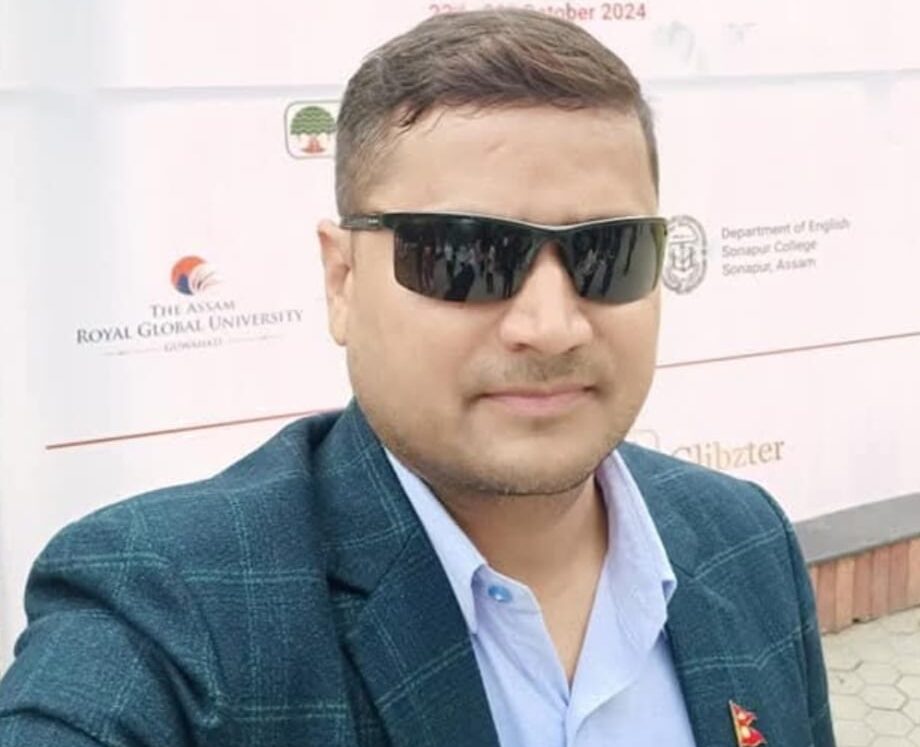
We got into a train in Lucknow, which took us through to Guwahati in 36 hours- my first taste of a long-distance train ride. The melodic sound of the train, the transition of the scenery that appeared outside the window, and the impromptu discussions with other passengers with diverse backgrounds made this trip a moving experience. Dr. Jora is an excellent storyteller and has something critical to say about educational reforms, which passed very quickly. When we arrived, the reception at The Royal Global University was warm, systematic, and, in an instant, banished the fatigue of the trip and transported an infusion of academic zeal.
Right at the entrance of the Royal Global University, my first impression was impressive. This culture of efficiency, cleanliness, and student-centric facilities, besides the show of impressive physical structures, was also remarkable. Its digital library, sports arenas, research labs, and various dining facilities all attest to an immense institutional investment in holistic student development. Pedagogical innovation, strategic plans with regard to international partnerships, and quality assurance were some of the approaches we learned during our official meeting with the Vice Chancellor and some of the senior members of the teaching faculty.
These were not air castles but practicalities which are very real and up and running, and a harsh reminder that Leadership vision can be instrumental and cannot be simply wishful without policy and resources to support.
It was well planned by the organisers beyond the conference halls. Another dimension of learning happened through sightseeing tours in Guwahati and Assam. Our visit to the Brahmaputra River, Kamakhya temple, and Assam helped us associate geography with the cultural aspect and community identity. Through these experiences, I remained convinced that cultural exposure enhances academic activities by making them more oriented towards emotions and situational appropriateness.
“Exploring Languages and Literatures to Evolving Pedagogical Practices” is the theme of the conference that started on October 23 with a highly charged intellectual atmosphere. The researchers of various nations had very different approaches to the pedagogy of the English language, and all revealed that the infrastructural aspects, such as innovation and localisation, are essential to contemporary education. In my paper, “Teachers’ Experiences of Integrating Digital Technologies in ELT: A DigCompEdu Perspective”, it was report on the phenomenological inquiry into the challenges and opportunities experienced by English teachers in Nepal when they embrace digital technologies. Its relevance and its applicability across the globe were confirmed by the engaged feedback and constructive questions provided by the audience.
Another considerable professional achievement was the organization of chairing one of the sessions. Leadership and diplomacy were needed in guiding the presenters, moderating, and ensuring effective time management. This role increased my self-confidence in my ability to deal with the interactions of multi-cultural academic contexts and showed the need for a balance between form and openness in academic communication.
Other than the paper presentation, the conference itself supported a wide range of networking. The exchange with other countries in the region, such as India, Bangladesh, and others, demonstrated the universal nature of the issue of education provision, yet the innovativeness of each setting created. What became apparent was that the ELT community in Nepal has things to share and that these are the types of platforms required to make our voices heard in the global discussions.
One very interesting part was the visit to Sonapur College. A visit to its facilities, administrative structure, and faculty involvement was a real-life experience on how physical infrastructure and institutional culture can be used together to promote quality education. The conversation with the principal produced various ideas that could be implemented in the Nepali higher education system- streamlined systems of administration and faculty development programs.
And in between academic endeavours, lighter, more memorable moments with Dr. Jora. I remember how we laughed at the flaming tongue-tingling spice of Indian dishes at a street market in Guwahati, or how we spontaneously traded poetic lines on the lengthy train ride back home. Such were not just personal pleasures but the displays of how collegial camaraderie may turn the professional way into a very humane and memorable experience.
The journey back was arduous and physically tiring, but ended up being a cogitative retreat. I recalled once more the scholarly interactions I had, the models of the institutions that I had visited and the personal encounters that I had had. The long hours of travel gave me room to think about how such experiences could be converted into actions to improve my teaching, research, and the institution’s deliverables.
Among the most memorable things to be learned during this tour was that the Indian political heads and education ministers are addressing education very solemnly. It was clear that the education sector has governmental support (high funding, policy orientation and appreciation of academic achievement) during the conference and the campus visits. Ministers were no figureheads, playing an active part in educational activities; they had certain details upon which they could discuss the very reforms and had a public role in promoting the cause of knowledge gaining.

The other interesting thing that I found when I visited India was the status and manner of teacher treatment. The teachers also seemed to be quite well compensated with a relatively high pay rate in most of the institutions I have visited, and also through the discussions I had with the faculty members who were supported by the institutions in a way that increased their professional dignity. The salaries tend to be comparable to the cost of living and very competitive to lure qualified people into the teaching career.
In addition to compensation, the educators get access to constant professional development programs, research grants, and academic exchange opportunities. Respect shown to teachers is not only confined to the four walls of the campus but extends further in the larger society in the form of invitations to social functions, being referred to in policies, and most importantly, being honoured with rewards and recognition. It also helps bring pride and inspiration through cultural and institutional identification that are bound to reflect the positive change as far as classroom activity and academic performance are concerned.
The case among the teachers in Nepal, however, is very different. Most of the teachers, especially at publicly based facilities, have to grapple with poor wages, fewer chances of professional development, and low recognition within the institutions. It frequently results in demotivation, brain drain and reduction in quality of teaching, owing to this lack of material and social reward. Nepal should understand that education cannot be built on any new system without teachers. In order to emulate India, we need to model fair and competitive remuneration of teachers, career growth opportunities and a culture in society that appeals to the importance of teachers as nurturers of the nation. Tangible support, appreciating their knowledge and official acknowledgement of their efforts would not only raise the status of the profession but also lead to a phenomenon known as a multiplier effect on the overall quality of education.
Education is not regarded as an outer focus in India, but rather as a driving force in the national development of the nation. Politicians always comprehend well about academic issues, and their involvement in educational activities is not ceremonial but effective. At ministerial levels, the opening of new innovative curricula, the investment in research, the extension of the digital infrastructure, and the international academic partnerships are enhanced.
This is one of the commitments that Nepal can and should learn. In our terms, education is highly rhetorical yet not extended and addressed by way of policy proceedings and budgets. Due to the significant change in Nepal, political leaders have to look at education as an investment rather than an outlay on the capacity of the nation. Some of the achievements of India can be duplicated by having a culture of accountability within the education policy and strong, consistent funding.
Taking into account my observations, the approach of India has long-term planning, plus short-term planning. The university leadership are often addressed by the national and state-level education ministers who also reward innovation, and provide institutions with autonomy as well as accountability. This creates a competitive, but supportive atmosphere of educational supremacy.
In the case of Nepal, implementing this kind of framework would imply empowering the training of teachers, the enhancement of the facilities, the promotion of research via grants, and the correlation between education policy and employment and innovation. What holds such change together is political will, and this, perhaps, is the most fundamental non-scholarly lesson that I brought back home with me after the conference.
In hindsight, it is more than just a move from Darchula to Guwahati. It was the adventure of career development, cultural education and world change. I have not only come back with research feedback and institutional linkages but also a reiterated belief that quality education has an irrevocable pillar of vision, policy, resources and human connection.
I would like to explicitly thank the ELTAI International Conference organisation team, Far Western University, Darchula Multiple Campus, and the Research, Innovation, and Development Centre of Far Western University. This kind of cooperation would be impossible without which it would not be possible to participate in the international platforms. The collaboration of group implementation and personal drive is the real motivator of scholastic progression.
In the future, I will draw the most valuable practices I have seen into my personal instructional and research practice and will find ways to pursue international cooperation. What is more important, however, I would like to promote in Nepal a political culture where the level of attention to the educational future of the country can be compared to that of how seriously India approaches it. This trip was not only an academic experience, but was also a transformative experience that interlaced scholarship, friends, culture and policy understanding that will be an everlasting aspect of my career life.
Author: Dammar Singh Saud, Assistant Professor of English Language Education at Far Western University, holds an M.A., M.Ed., and MPhil in ELT and is pursuing a PhD in TESOL. His research focuses on ELT pedagogy, ICT integration, teacher professional development, and translanguaging practices. An active scholar, he has reviewed articles for peer-reviewed journals and serves as the editor of Exploration and IELTA Nepal’s online magazine. Saud has presented papers at international conferences, contributing to global discussions on English language teaching and fostering innovation in the field. His academic work reflects a dedication to advancing research and practice in ELT.
✍️ The author, Dammar Singh Saud, is an Assistant Professor at Darchula Multiple Campus, Far Western University.