



Some journeys take us to new places, while others change how we understand ourselves, our work, and the world around us. Some trips take us to places we haven’t been, and trips that transform our sense of identity, of work, of life around us. My trip from Mahendranagar, Sudurpashchim Province, Nepal to Pune, India for the 20th International and 56th Annual Conference of the English Language Teachers’ Association of India (ELTAI) was both. I went to present my research, get feedback from colleagues, and engage in the international scholarly conversation. I came back with new ideas, new experiences and a renewed sense of purpose in teaching as an English language teacher educator.

My trip started on 3 October 2026, when I left Mahendranagar and went to Ghaziabad to visit my relatives. Before I flew to Pune on 6 October, I visited Delhi also. This was my first Indian flight, and I can remember the excitement of getting to a new city for a significant academic get-together. Airports, metro, Uber and auto-rickshaws were added to the mix. Every little exposure to the new environment required flexibility and the spirit of discovery. I was reminded of the need to learn beyond the classroom, beyond the conference hall, and through visits, travels, and people and places that are outside of our daily lives.
As I headed towards Pune, I was aware that this was no ordinary opportunity to attend an international conference. I was nominated by the Nepal English Language Teachers’ Association (NELTA) to attend a professional meeting consisting of teachers and researchers from diverse backgrounds. I felt very lucky and responsible, coming from Sudurpashchim, where opportunities in the international academic arena were limited. I wanted to make the best of my time, give back and take back ideas that would help fellow colleagues and students.

Finding My Place in an International Academic Community
Held from 7 to 10 October 2026 at MIT Art, Design and Technology University, Pune, the conference centred on the theme “English on the Edge: Survive? Evolve? Thrive?” The theme invited participants to examine the changing landscape of English language education amid technological developments, linguistic diversity, evolving pedagogies, and changing expectations of teachers.
By listening to different presentations from different educational settings, I noticed that many issues that are relevant to teachers in the professional world are similar across geographic, institutional and social settings despite the context in which they are encountered. I was reflecting on my own institution, my students, and the teachers that we train. What are some ways to bridge the gap between theory and practice for teachers? How to make professional learning a never-ending journey instead of a one-time training? How can teachers stay responsive to learners whose linguistic, cultural and educational experiences are varied? The conference was made relevant to the individual by these questions. The sessions were not just to add to my knowledge base, but also to think about how the concepts were introduced could relate to my teaching and research.
I was fortunate enough to be able to lead a research presentation session on 7 October. This duty got me thinking about academic leadership. The role of the chair is to do more than just introduce speakers and keep track of time; it is to listen, be fair, and facilitate meaningful scholarly exchange. I liked the idea of each presentation bringing a different point of view and academic discussion building on that of single researchers.
It reaffirmed my sense of being part of an international academic community, not just to present work to others or to be recognised for it. It’s also about listening generously, thinking critically and being open to the ideas that might be opposing the ideas in our heads. I was privileged to be a part of this community, and to learn from the experiences and ideas of others.
Asking Difficult Questions and Sharing Local Experiences
The highlight of the conference for me was my invited lightning talk about “We are qualified!”. But do we make good teachers?” was the title of a talk at the UTK Auditorium on 8 October. Dr Chumki Biswas facilitated the session, which was conducted from 2 pm to 3:10 pm. I also presented my research paper titled “Experiences of English Language Teacher Educators’ Reflective Practices for Professional Development in Nepal.”
My lightning talk question is based on a growing concern in my career. Academic qualifications are necessary, but one does not need to be academically qualified to be an effective teacher. Qualifications are evidence of learning, but excellent teaching requires empathy, pedagogical judgement, responsiveness and learning from experience.
As a teacher educator, I did not want to approach this question in a purely theoretical way. It prompted me to look at the way I do my work. Am I making what I know relevant to what’s happening in the classroom? Am I ever doubtful about what to do, or do I sometimes fall back on routines that are comfortable? If I am not a reflective practitioner, how will I be able to encourage other teachers to be reflective? The questions made me remember that professional development starts with a humble attitude to look at our own work.
In my work on the teacher educators’ experience of reflective practice in Sudurpashchim Province, I continued this reflection by analysing my interviews with the teacher educators. During my research, I have grown more interested in the ways that teacher educators reflect on, rethink, and reconnect theory to practice, and in growing professional self-awareness. In this use, the word reflection is not simply a summary of the lesson following its conclusion. It is an ongoing process of questioning, interpretation and exploration of potential improvements.
It was particularly significant to present this research in Pune as it helped to bring experiences from my own educational context into an international academic conversation. While teachers in places where there is less opportunity for international sharing may be unlikely to be found on the international stage, their experiences have much to offer in wider discussions about teacher learning and educational change. The context of Sudurpashchim is influenced by specific regional and institutional issues, but also points to more general issues of how teachers can maintain professional learning in an environment with unevenly distributed resources, opportunities, and supports.

When I was able to share the results with others, I was even more certain of the importance of research that comes from the local community. It also made me aware that research doesn’t end with a paper being written or presented. Limits, new lines of inquiry, and additional research can be suggested by questions from others, alternate interpretations, and discussion with professionals. I came away from the sessions with a deeper understanding of the impact that my work could have and an increased awareness of what I still need to investigate.
The People Who Made the Journey Meaningful
The conference was attended by over 15 Nepali teachers. Being able to connect with fellow teachers from Nepal in an international academic environment was a great opportunity to feel close to others and feel a sense of community. We were from different institutions and professional backgrounds and had a common interest in the field of English language education. I also assisted colleagues in picking up certificates that had been left behind. It was a small one, but it did symbolise the support of each other that makes professional communities stronger.
I also remembered that opportunities in academia are not always won by a single individual. I would like to thank Darchula Multiple Campus, Far Western University, University Grants Commission Nepal, NELTA, ELTAI, relatives, and those who supported and encouraged me. NELTA arranged the accommodation and food arrangements, and I paid for my travel from Mahendranagar to Delhi, my flights from Delhi to Pune, local transportation and other incidental costs, which totalled around NPR 40,000.
These costs made me more conscious of the financial barriers that can stand in the way of educators attending international academic events. Teachers and researchers have great things to offer but don’t have the means to travel. More institutional support, travel grants, and funding options could help make participation more based on academic interest, commitment and contribution than on personal financial capacity.
Post-conference, I had a brief visit to Mumbai with my relatives. After a few days of academic talks and travel arrangements, this time proved to be one where it was a chance to relax and experience a different way of travelling. I realised that when I was surrounded by my relatives, working for success goes hand in hand with the love and support I get from them. The experience was more than research presentations and attendance at sessions; it’s also about the discovery of new places, the sharing of memories and an appreciation of the people who make our journeys possible.
Returning Home with a Renewed Commitment
I came back from Pune with new professional connections, academic experiences and ideas to ponder over when I was teaching and researching. Most importantly, the conference reinforced my dedication to enhancing professional learning to be more reflective, collaborative, and responsive to local realities.
I hope to discuss and exchange information, ideas, and concepts with colleagues and students within my field, to engage in reflective thought, and to explore opportunities for joint research and professional development. I am also interested in learning about the possibilities of extending access to professional learning, especially for teachers who are not able to attend PD sessions on a regular basis. But technology and international practices should be taken from a critical perspective and localised. Their value is contingent upon their ability to meet teachers’ needs and the language, institutional, and resource situations in which they operate.
The conference also brought home to me a concept that I believe has been a core element of my own teaching practice – the need to perpetually learn from practice. As teacher educators, we bear not only the responsibility to explain what good teaching is, but also to show that we are willing to reflect on our choices, recognise our boundaries, and gain insight from our experiences. Professional development is not just about acquiring qualifications or going on programmes, but it’s about thinking about what we learn and acting on it.
In retrospect, I think of the trip from Mahendranagar to Pune as a chance to discuss with you the experiences of English language teacher educators in Nepal as well as my own work responsibilities. I am thankful to have represented Nepal, conducted research in Sudurpashchim and interacted with international educators. But what is most impactful is not what happens after the presentation, but what questions keep coming into my mind.
I now come back with more resolve to ‘research for practice’, to facilitate reflective teaching, to make a contribution to the professional development of colleagues and students. I’ve realised that the experience has helped me think about international academic engagement in ways that strengthen and build on what we do here, and also reminded me to take more of a role within my own educational community, in my own ways.
The experience of travelling across borders is just as important for me as it is for my students: it is not just a geographic crossing but one that brings back a wider worldview, more confidence and a stronger resolve to be a teacher and a learner.
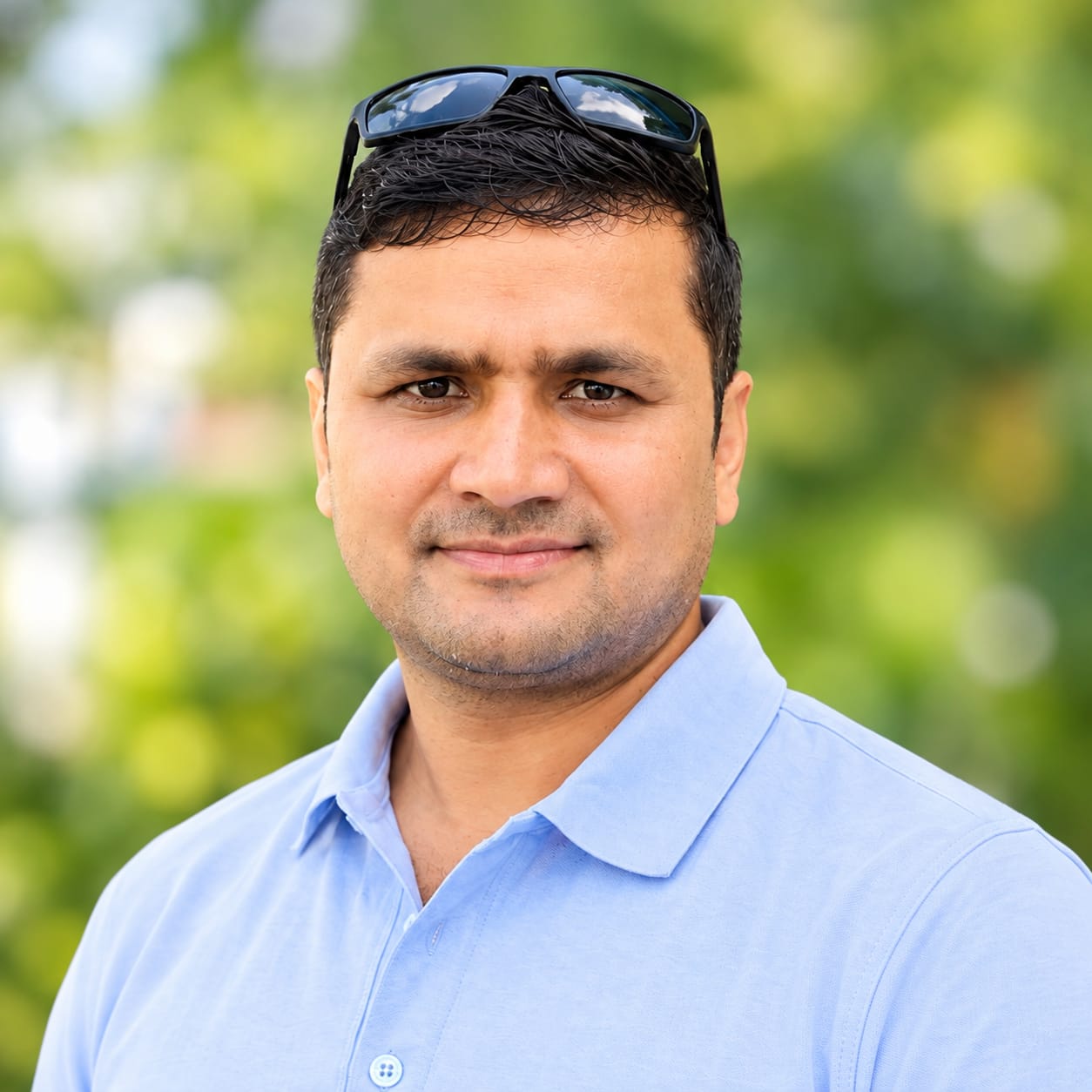
Author: Dammar Singh Saud is an assistant professor of English language education at Darchula Multiple Campus, Far Western University, Nepal. He holds an MPhil in English language education and is currently pursuing a PhD in TESOL. His research interests encompass English language teaching pedagogy, AI integration in ELT, teacher professional development, and translanguaging practices in multilingual contexts. As an active researcher and academic contributor, he has served as a reviewer for several peer-reviewed journals and currently serves as the Editor-in-Chief of “Exploration”, a peer-reviewed academic journal. He is also an editor of the online magazine of the International English Language Teachers Association Nepal and the “NELTA ELT Forum”, an e-zine published by the Nepal English Language Teachers’ Association. Saud has published extensively in peer-reviewed journals and has presented research papers at numerous national and international conferences, contributing to scholarly discourse and innovation in the field of English language education.